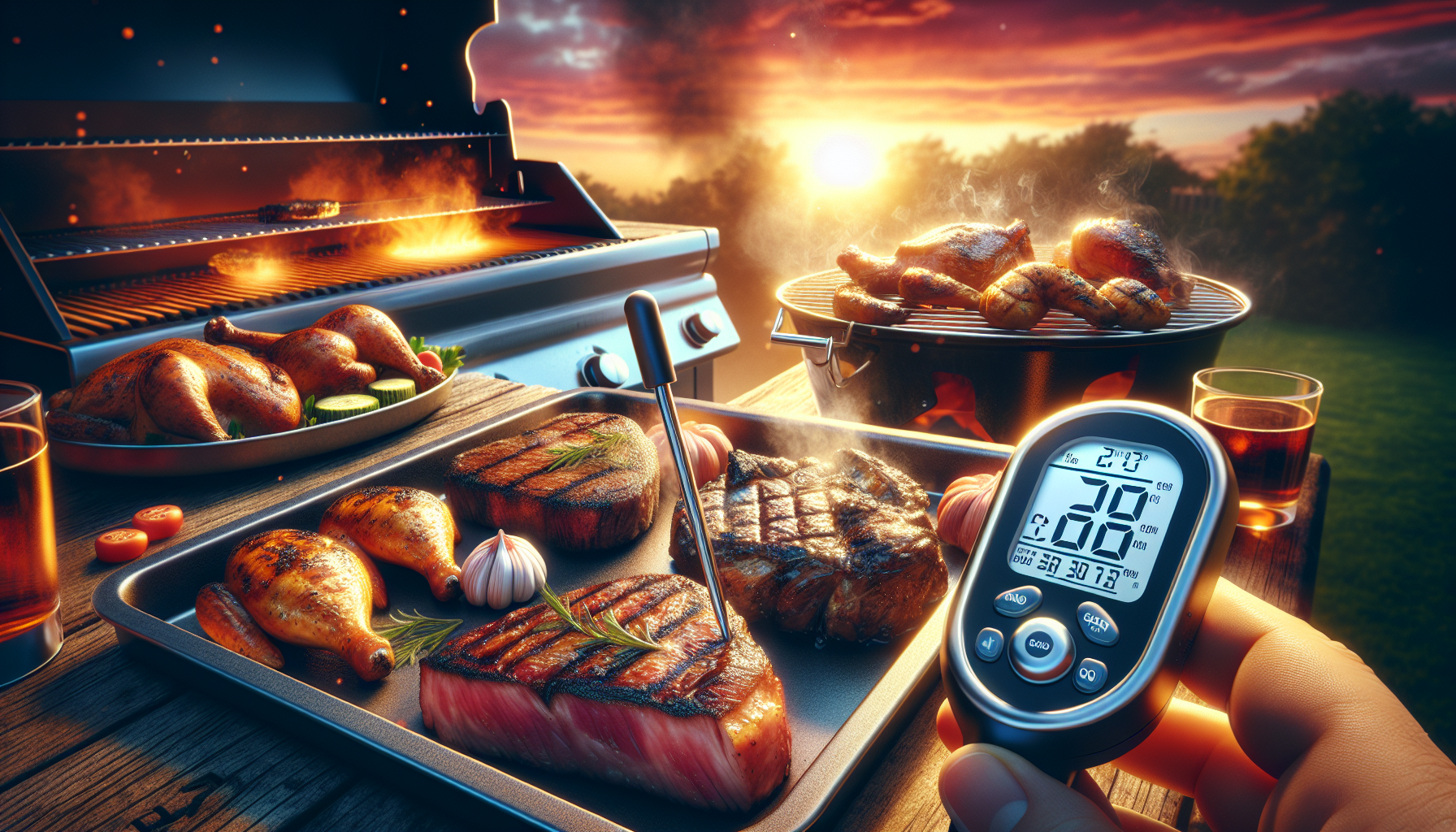
Introduction to Meat Thermometers
Meat thermometers are indispensable tools for BBQ aficionados seeking to elevate their grilling game. These precision instruments are designed to measure the internal temperature of meat, ensuring that your prized cuts are cooked to perfection every time. According to a report by CNET, a reliable meat thermometer is not just an accessory; it’s a crucial component of the BBQ enthusiast’s culinary arsenal. These devices eliminate guesswork in determining doneness, helping you achieve an ideal balance between food safety and optimal flavor.
Modern meat thermometers come in various types, from simple analog probes to advanced digital models with multiple sensors and wireless connectivity. Some high-tech options, like the Chef iQ Sense smart thermometer, even allow you to monitor your BBQ remotely, ensuring you never miss the perfect moment to pull your meat off the grill. The same CNET report highlights these benefits.
Investing in a quality meat thermometer is a decision you won’t regret. Unlike some kitchen gadgets that gather dust, a good thermometer can last for years and become an integral part of your BBQ setup. It’s a specialized tool that pays dividends in the form of consistently delicious results and the confidence to tackle even the most challenging cuts of meat.
Understanding the Types of Meat Thermometers
For BBQ enthusiasts, understanding the different types of meat thermometers is crucial. Let’s explore the three main categories: digital, dial, and probe thermometers, each offering unique benefits for your BBQ adventures.
Digital Thermometers
Known as the speed demons of temperature reading, digital thermometers are a favorite among BBQ pros. These devices provide quick and accurate readings, typically within 5-10 seconds. The digital display eliminates guesswork, making them ideal for high-heat grilling where every second counts. Many models come with preset temperatures for various meats, simplifying the cookout process.
Dial Thermometers
Also known as analog thermometers, these classic tools have been a staple in BBQ kits for generations. Although they may take longer to give a reading (usually about 15-20 seconds), dial thermometers are incredibly durable and don’t require batteries. Their simplicity makes them a reliable choice for traditionalists who appreciate the art of BBQ timing, especially for slow-cooking methods like smoking.
Probe Thermometers
For the multitasking pit master, probe thermometers are a revelation. These devices feature a long, heat-resistant cable that connects the probe into the meat to a digital readout outside the grill or smoker. This design allows you to monitor your meat’s internal temperature without opening the lid, maintaining consistent cooking temperatures. Some advanced models even connect to your smartphone, alerting when your meat reaches the desired doneness.
Each type of thermometer has its place in a well-equipped BBQ arsenal, with regular calibration essential to maintain accuracy. By understanding and utilizing these different types of meat thermometers, you’ll be well on your way to achieving pit master status.
Importance of Temperature in BBQ
Mastering the art of BBQ requires more than just selecting the right cuts of meat and perfecting your rub recipe. One of the most crucial elements in achieving BBQ perfection is monitoring and controlling temperature. For BBQ enthusiasts, understanding the importance of temperature can mean the difference between a mediocre meal and a mouthwatering masterpiece.
Temperature monitoring is essential for food safety, ensuring that harmful bacteria are eliminated. CNET recommends using a reliable meat thermometer to avoid mistakes when preparing meals. Beyond safety, temperature control is key to achieving the perfect doneness in your BBQ. Each type of meat has its ideal internal temperature for optimal flavor and texture.
Maintaining consistent cooking temperature is crucial for even cooking and developing that coveted smoke ring and bark. Fluctuations can lead to uneven results and affect overall quality. For serious BBQ enthusiasts, advanced temperature monitoring tools like the Chef iQ Sense offer wireless functionality and precision that can elevate your BBQ game significantly.
How to Use a Meat Thermometer
Using a meat thermometer is crucial for achieving perfectly cooked BBQ every time. Here’s how to use one like a pro:
- Choose the right thermometer: Opt for a digital instant-read thermometer for quick, accurate readings. Consider a wireless smart thermometer like the Chef iQ Sense for remote monitoring.
- Calibrate your thermometer: Calibrate before first use and periodically thereafter using the ice water method to ensure accuracy.
- Insert properly: For most meats, insert the probe into the thickest part, avoiding fat and bone.
- Wait for a steady reading: Allow your thermometer a few seconds to stabilize for an accurate temperature.
- Know your target temperatures: Different meats require different internal temperatures. For example, beef brisket is typically done at 195-205°F, while chicken should reach 165°F.
- Use multiple probe points: For larger cuts, check the temperature in several spots to ensure even cooking.
- Clean after each use: Sanitize the probe to prevent cross-contamination.
By mastering the use of a meat thermometer, you’ll elevate your BBQ game, ensuring every piece of meat is cooked to perfection and impressing your guests at every cookout.
BBQ Techniques and Meat Thermometers
BBQ enthusiasts know that mastering different techniques can elevate your grilling game. Two primary methods stand out: smoking and grilling. Each technique imparts unique flavors and textures to your meat, and the right tools can make all the difference.
Smoking involves cooking meat at low temperatures over a long period, perfect for larger cuts like brisket. Conversely, grilling uses high heat for faster cooking, ideal for steaks and smaller cuts. Regardless of your method, the meat thermometer remains essential for BBQ mastery.
According to CNET, smart thermometers with features like wireless monitoring have revolutionized temperature control, ensuring your foods are cooked to perfection. Advanced thermometers allow for precise temperature monitoring, even alerting you when your meat reaches the desired temperature.
Choosing the Right Meat Thermometer
Choosing the right meat thermometer is crucial for BBQ perfection. Here’s what to consider:
- Instant-Read Thermometers: Quick and versatile, ideal for spot-checking temperatures on the grill.
- Leave-In Probe Thermometers: Continuous monitoring makes these suitable for smoking sessions.
- Smart Thermometers: Perfect for tech-savvy pitmasters, offering wireless connectivity and smartphone apps.
- Key Features: Focus on accuracy, temperature range, response time, and durability. For serious BBQ enthusiasts, multi-probe systems allow simultaneous monitoring.
While budget options exist, investing in a high-quality thermometer ensures better accuracy and durability. Remember, the best thermometer depends on your specific BBQ style and needs.
Maintaining Your Meat Thermometer
Proper maintenance of your meat thermometer is crucial for ensuring accurate readings and prolonging its life. According to CNET, a well-maintained thermometer can last for up to a decade.
- Clean after each use: Use warm, soapy water and dry thoroughly.
- Store properly: Keep in a dry place, using protective cases if available.
- Check batteries regularly: Ensure fresh batteries for digital models.
- Calibrate regularly: Use the ice water or boiling water method to maintain accuracy.
By following these maintenance tips, you’ll ensure your meat thermometer remains a reliable sidekick for all your grilling adventures.
Common Misconceptions About Meat Thermometers
Many misconceptions exist about meat thermometers in BBQ cooking, but using them is a sign of precision and BBQ mastery.
- Misconception: Thermometers are only for beginners. In reality, even seasoned pitmasters rely on them.
- Misconception: You can tell when meat is done by its color. A thermometer provides an objective measure of internal temperature.
- Misconception: Thermometers let out all the juices. The small puncture does not affect the meat’s juiciness significantly.
- Misconception: All thermometers are the same. Modern thermometers offer advanced features that can improve BBQ results.
By dispelling these myths, BBQ enthusiasts can embrace meat thermometers as essential tools in their grilling arsenal.
Conclusion: Elevating Your BBQ Experience with Thermometers
As any seasoned pitmaster knows, the key to BBQ perfection lies in the details, and a reliable meat thermometer is one of the most crucial tools in your arsenal. Incorporating a meat thermometer into your BBQ routine isn’t just about precision; it’s about elevating your entire grilling experience.
According to CNET, some BBQ enthusiasts are so devoted to their thermometers that they’ll “drive them across the country to avoid any mistakes when making dinner for extended family.” This level of dedication highlights the impact a good thermometer can have on your BBQ game and underlines the peace of mind it provides in ensuring food safety.
By incorporating a reliable meat thermometer into your grilling toolkit, you’re not just improving the quality of your food – you’re enhancing the entire BBQ experience. Whether you’re hosting a backyard gathering or competing in a BBQ competition, a thermometer is the unsung hero that can elevate your BBQ from good to extraordinary.
So, as you fire up the grill for your next BBQ adventure, make sure your trusty meat thermometer is by your side. It’s more than just a tool; it’s your partner in creating unforgettable BBQ moments and flavors that will keep your friends and family coming back for more.
Sources
CNET – Never botch your July 4th barbecue again with 70% off the smart thermometers we swear by
Fleet Owner – Timestrip introduces new temperature monitoring devices
The Washington Post – Independence Day cookout recipes: From burgers to pie
WFMY News 2 – Salmonella: How to keep it out of your fridge, kitchen, and off your plate